Choosing the right email activity can make a difference to ecommerce revenue. Klaviyo gives brands two options: automated flows and scheduled campaigns. Both use customer data and segmentation, but they solve different marketing problems. Flows respond to individual behaviour.
Campaigns deliver a planned message to a selected audience. The strongest strategy is rarely an either-or choice. Instead, successful brands build flows first, then use campaigns to create timely demand, promote products and strengthen customer relationships. This guide explains the 10 key differences and shows when each approach works best.
What are Klaviyo Email Marketing Flows?
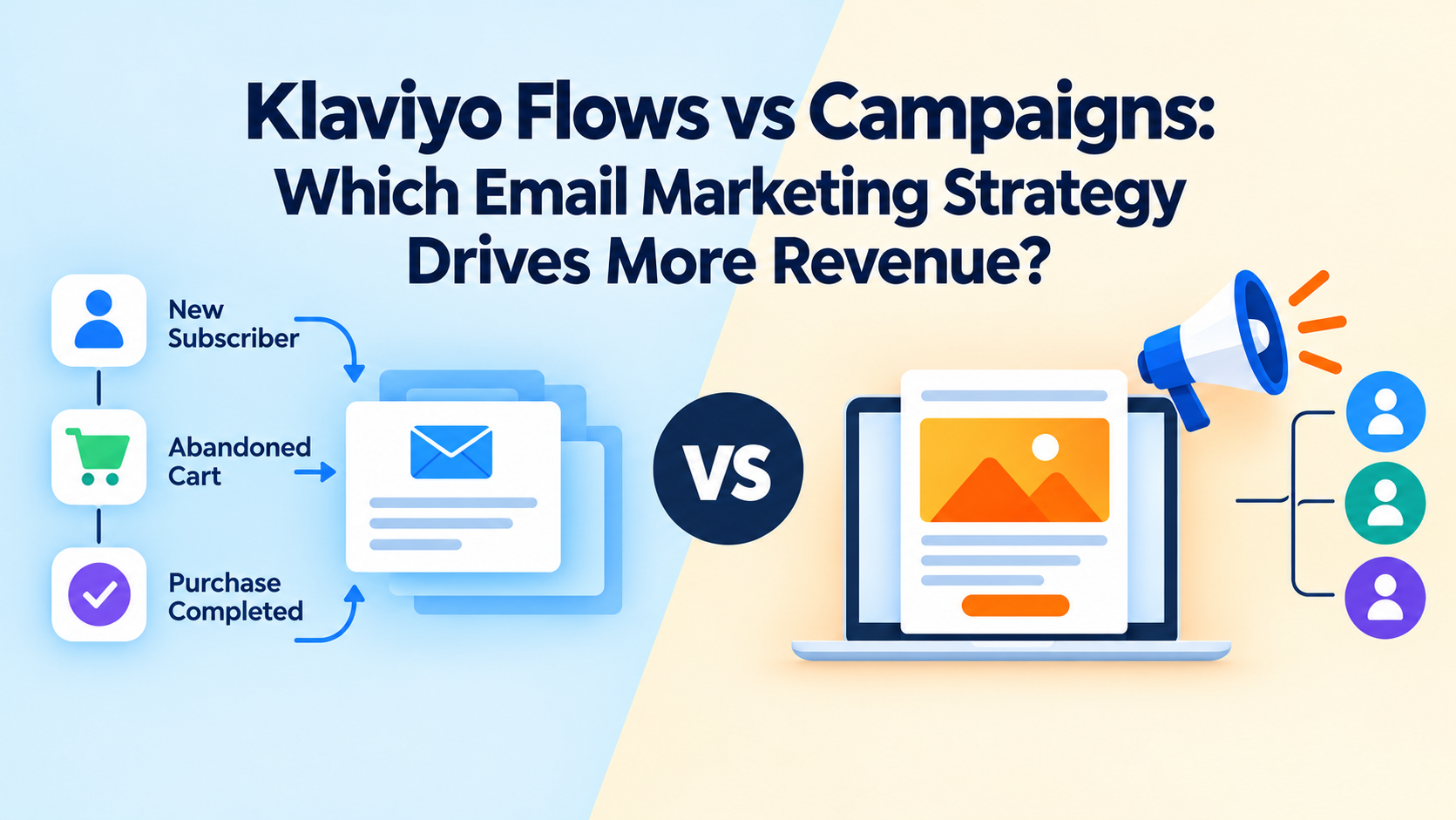
A Klaviyo flow is an automated sequence of emails triggered by a specific action or event. These actions are known as triggers. They occur when a user interacts with your website in a meaningful way.
Common triggers include signing up for a newsletter, adding an item to a shopping cart, or completing a purchase. Once the trigger is activated, the flow runs in the background without any manual intervention from your team.
The primary advantage of flows is their ability to deliver the right message at the exact moment a customer is most likely to engage. Because they are behavior based, flows feel highly personalized and timely.
They act as a 24/7 sales engine, consistently moving prospects through the customer journey and recovering potentially lost revenue. For many e-commerce brands, flows are the most efficient use of time and resources because they offer an almost infinite return on investment once properly set up and optimized.
What are Klaviyo Email Marketing Campaigns?
Campaigns are one time emails you create and send manually to a predetermined list or segment of subscribers. Unlike flows, there are no action based triggers.
You simply decide the date and time you want the message to go out. Campaigns are typically used for time-sensitive announcements, such as new product launches, holiday sales, or weekly newsletters.
Campaigns give marketers total control over their brand narrative in real-time. They are perfect for "burst" revenue, generating a significant spike in sales over a short period.
For instance, a flash sale campaign sent on a Tuesday can drive more revenue in 24 hours than some flows generate in an entire month. However, campaigns require ongoing effort. You must design, write, and schedule each one, so their ROI is more closely tied to your marketing team's ongoing work.
Key Differences Between Klaviyo Flows vs Campaigns
Understanding the differences helps you choose the right format for each marketing goal.
1. Trigger versus schedule
A flow starts when a subscriber meets a trigger or filter, such as signing up or ordering. A campaign goes out at a time you choose. Flows react to behaviour. Campaigns follow your marketing calendar.
2. Automated versus manually planned
Flows send automatically once built and activated. Campaigns need a person to prepare, approve and schedule each send. Automation reduces repeated work, while campaigns provide direct control over each message.
3. Individual moment versus shared moment
Flow recipients enter at different times, so they may receive emails on different days. Campaign recipients are chosen for one send and usually receive it within the scheduled window. Use a flow for “after this action” and a campaign for “this is happening now”.
4. Customer journey versus announcement
Flows support ongoing journeys, such as welcoming a subscriber or helping a recent buyer use a product. Campaigns focus on a current announcement, offer or piece of content. Both can support a launch: a campaign introduces it, and a flow follows up on customer interest.
5. Ongoing maintenance versus repeat production
Flows can keep running, but check them when products, prices, policies or messages change. Campaigns need new planning and production for each send. Neither is maintenance free: review flows and quality check every campaign.
6. Behavioural personalisation versus message targeting
Flows can use customer actions and data to shape messages. Campaigns can also be targeted using engagement, order history or product interest. The distinction is not “personalised or not.” It is how you select the audience and message.
7. Evergreen versus time-sensitive content
A welcome email or product-care tip may stay useful over time, making it suitable for a flow. A weekend sale, seasonal update or event reminder has a limited window, so a campaign is usually clearer. Remove expired offers from automations.
8. Different testing priorities
For flows, test entry rules, delays, message order and exit points. For campaigns, test the audience, subject line, creative, offer and send time. Where possible, change one key element at a time and judge it against the email’s goal.
9. Measurement and attribution
Both formats can contribute to sales, but results need context. A flow may reach fewer people with strong intent. A campaign may reach more people during a promotion. Compare revenue with clicks, conversions, unsubscribes and audience size, using consistent attribution settings.
10. Different use of team time
Flows take focused work to map, write, build and test, followed by periodic reviews. Campaigns require ongoing planning and creative production. Use flows for repeatable customer moments and campaigns for timely communication. Do not force one format to do both jobs.
Klaviyo Flows vs Campaigns: Which Strategy Drives More Revenue?
Flows often produce more sales per recipient. They reach people during a high-intent moment. A new subscriber, a shopper with an open basket or a recent buyer has shown interest. A useful email can help that person take the next step.
Flows do have limits. They need the right data, triggers and site activity. A low-traffic brand or small list may not generate enough events for flows to reach their full value. A flow can also fail if the timing is poor, the copy is vague or the filters are wrong.
Campaigns can drive more total sales during launches and offers. They reach a wider audience. They also create demand for products that auto emails may not show. A strong campaign can bring a quick lift in sales.
Campaign results are less steady. They depend on the offer, design, audience, timing and season. You may see a sales spike, followed by a quiet period. Flows help fill that gap with steady, useful emails.
The best answer is a balanced one. Flows often improve sales per recipient. Campaigns create reach, demand and sales volume. Together, they support quick wins and long-term growth.
Why your brand needs both
Using only campaigns can leave money on the table. You might send a sale email to a shopper who left a basket yesterday. That person may need a direct reminder instead. You may also miss the chance to welcome a new subscriber or follow up after a first order.
Using only flows can make your marketing feel quiet. Auto emails respond to intent, but they cannot replace launches, seasonal stories and timely offers. Customers need new reasons to return, not only reminders based on past actions.
Together, the tools cover more of the customer journey. Flows handle the moments between visits. Campaigns create reasons to visit again.
How to Build a Revenue Focused Plan?
Start with your key flows. Check your welcome, abandoned cart, browse abandonment, post-purchase and winback sequences. Review the trigger, timing, filters, content and product links in each one.
Next, create a simple campaign calendar. Consistency matters more than sending every day. Plan around customer needs, stock levels and key dates. Start with engaged groups. Exclude recent buyers when a message doesn’t suit them.
Measure sales, not only opens and clicks. Review sales from each email, order rate, unsubscribes, inbox reach and sales per recipient. Our guide to email marketing metrics that matter explains which metrics help ecommerce brands track performance and identify growth opportunities. A message with a lower open rate may still generate more orders. Test one clear change at a time, such as the subject line, offer, design or audience.
Also check for overlap. Smart Sending, clear exclusions and good timing can stop customers from receiving too many emails. A good plan should feel useful, not noisy.
Where Expert Support Helps
Klaviyo provides the tools, but results depend on how well you plan, build, and manage them. Flows need clear structures, relevant messaging, and regular testing. Campaigns need thoughtful planning, copy, design, targeting, and performance reviews.
Pear Digital helps ecommerce brands build connected Klaviyo systems. Its services include flow setup and overhauls, monthly campaign management, audience segmentation, inbox support, testing, and reporting. This connects automated customer journeys with planned campaigns so every email has a clear purpose.
If you are unsure where sales are being lost, a Klaviyo audit can provide a clearer starting point. It can identify broken flows, weak audience groups, missed opportunities, and campaign issues. You can then prioritise the changes most likely to improve your email performance before investing more time or budget.
Conclusion
Klaviyo flows vs campaigns is not a choice between automation and planning. Flows respond to customer actions, while campaigns deliver scheduled messages to selected audiences. Both can generate revenue when their timing, targeting, and content match customer needs.
Build reliable core flows first, then use campaigns to promote products and keep subscribers engaged. Measure orders, revenue per recipient, and customer engagement rather than relying on vanity metrics alone. If results remain unclear, audit your account and use the findings to guide your next steps toward sustainable ecommerce growth.